






Plant of the month - sedum
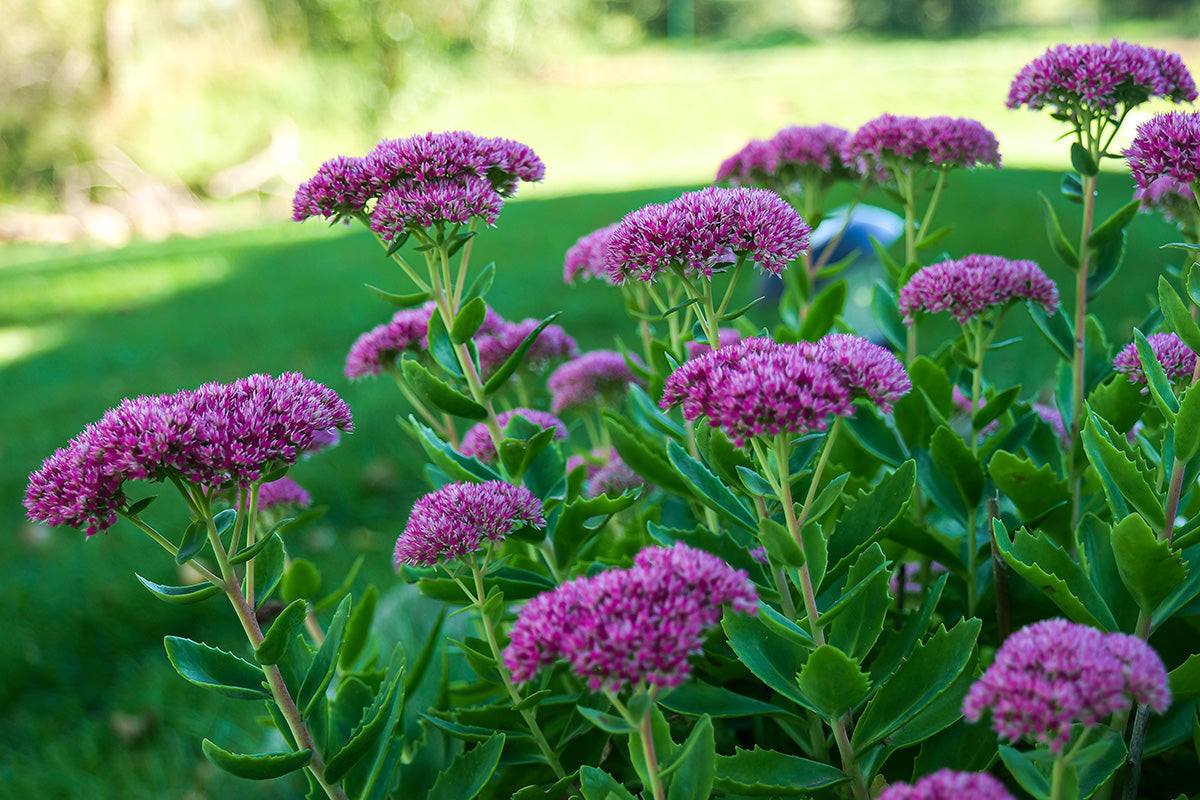
Sedums, or as the taller variety have been renamed, Hylotelephium, really come into their own at this time of year with their flat umbels of flowers slowly turning to deep shades of pink and red. But they are also unrivalled in their ability to provide interest throughout the whole year like no other plant, with the chocolate brown seed heads creating winter interest and looking wonderful when they catch the frosts.
Cut these down in February to make way for the new neat mounds of foliage loved by bees and insects.
One of the toughest varieties is Hylotelephium (Herbstfreude Group) ‘Herbstfreude’ or Sedum ‘Autumn Joy’, which is much easier to remember! It’s one of the larger varieties with pale pink leaves and salmon pink flower heads in summer. S. ‘Matrona’ has large flat heads of pale pink flowers in the summer, which contrast beautifully with the purple-tinged stems and leaves. S ‘Red Cauli’ is slightly shorter and neater, with deep red slightly smaller flowers heads. Other fabulous deep purple varieties include Hylotelephium ‘Jose Aubergine’. For a little sparkle, try Sedum spectabile ‘stardust’
With their fat succulent leaves they are well adapted to drought conditions. In fact, they tend to behave better in relatively poor free draining soil, so add some grit in heavier soils. They tend to work well with other grasses such as Stipa tenuissima and sesleria, along with agapanthus, salvias and Stachys byzantina.


