





Water, water, it's still there: Gardeners continue to deal with flooded gardens and waterlogging
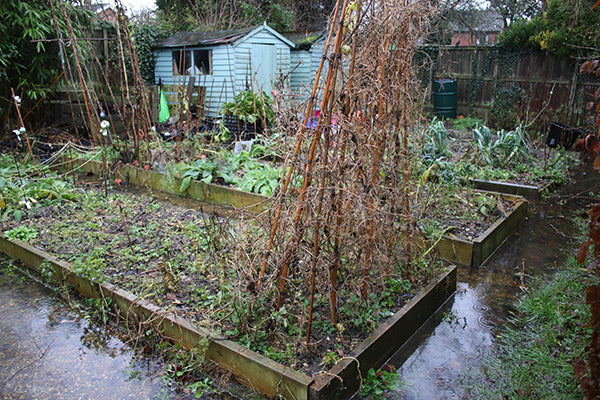
We have already blogged about climate change and flooding in December, but the subject just won’t go away. We have been really keen to get out and start the late winter preparations for a new growing season but it’s just been impossible – the ground is far too wet. Here in the Cotswolds we’ve not been severely flooded but we have had lots and lots of rain. Apparently, the UK has had 152% of average rainfall this last month, making it the fourth wettest January since 1910.
Lots of gardeners have been struggling with floods across the country, from George Clooney’s garden on the banks of the Thames in Berkshire, to the flood ravaged Plas Cadnant Hidden Gardens, near Menai Bridge, on Anglesey North Wales, and the Prince of Wales’ own Birkhall gardens in Aberdeenshire. When the news coverage dies down, when the immediate work of dealing with hard hit homes is underway, it’s only later that the devastation to gardens is considered. It’s not something to take too lightly, gardeners spend many years of hard work and love developing their gardens, so the loss of cherished plants, shrubs and trees can be an emotional blow.
Recognising this, the Royal Horticultural Society has today announced that for the first time it will formally recognise the efforts of flood-affected communities with a new Britain in Bloom Award for overcoming adversity. As their website says about the Award: "It will celebrate the resilience of those who work to bring flood-hit community spaces back to life, as well as recognising the impact and challenges that communities potentially face." Judging will take place in August.
For those of us dealing with wet and waterlogged soil, we can’t hurry the natural pace of drying. If the soil stays wet for a long time it can lead to shallow rooting and fungal diseases that kill roots altogether. There are some things we can do to improve the resilience of our gardens to flooding and waterlogging in future, such as planting extra trees, more mulching with compost to aerate soil and keep it in good heart, spiking and top dressing lawns, double digging once the soil dries out, keeping the soil covered during winter using green manures, but it all requires effort and patience. Unfortunately, this kind of extreme weather is probably the new normal and gardeners will need to find ways of adapting their gardening techniques.


