






Greener gardening - leave room for ladybirds
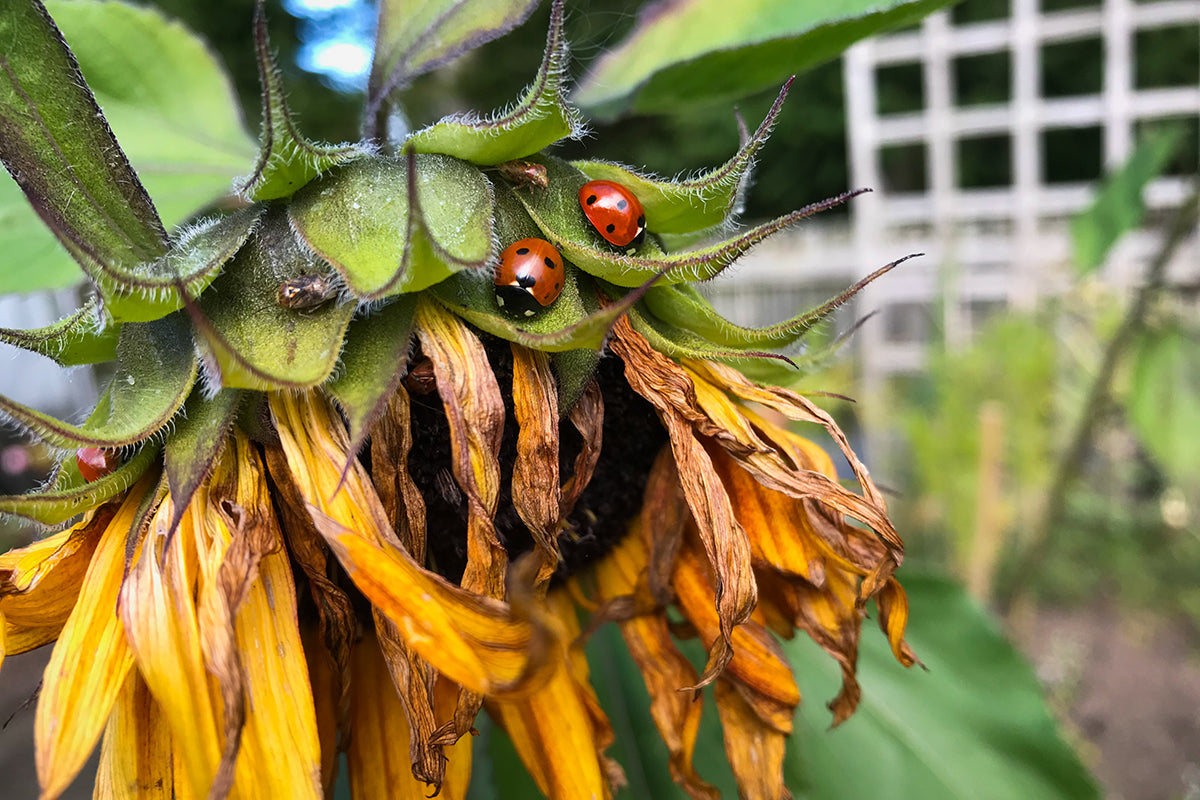
Ladybirds are a welcome sight in our gardens, helping to keep aphids and other pests under control. They’re brightly coloured and distinctive, so where do they hide in winter?
Ladybirds don’t hibernate, but like some other insects they do enter diapause: a state of dormancy where their development and metabolism slows. During this time they’ll take shelter in a variety of places, such as leaf litter, tussocks of grass, hollow stems, crevices in bark or in buildings.
We can do our bit to help them, and to ensure a healthy pest-eating population for next year by providing them with sheltered spots to rest for the winter. A purpose-built bug hotel can do the job, but there are other options requiring less effort: rather than cutting everything down, leave some seedheads and plant stems standing; pile up logs and twigs, and sweep a few leaf piles to the back of a border, where insects like ladybirds can hide.
When they do eventually emerge next year to feed and breed, avoid using pesticides on your plants, which can harm all kinds of insects and disturb the delicate ecosystem of your garden. Patience and persistence with wildlife-friendly methods is usually a much better long-term solution.


