







Plant profile - Ginkgo biloba
Ginkgo biloba, commonly known as ginkgo or maidenhair tree, is a unique species, native to East Asia, and is the last survivor of the Ginkgoales order of plants, which first appeared over 290 million years ago. Fossil records show that plants remarkably similar to modern ginkgo existed as far back as the Middle Jurassic period, about 170 million years ago, often earning it the title of a ‘living fossil’.
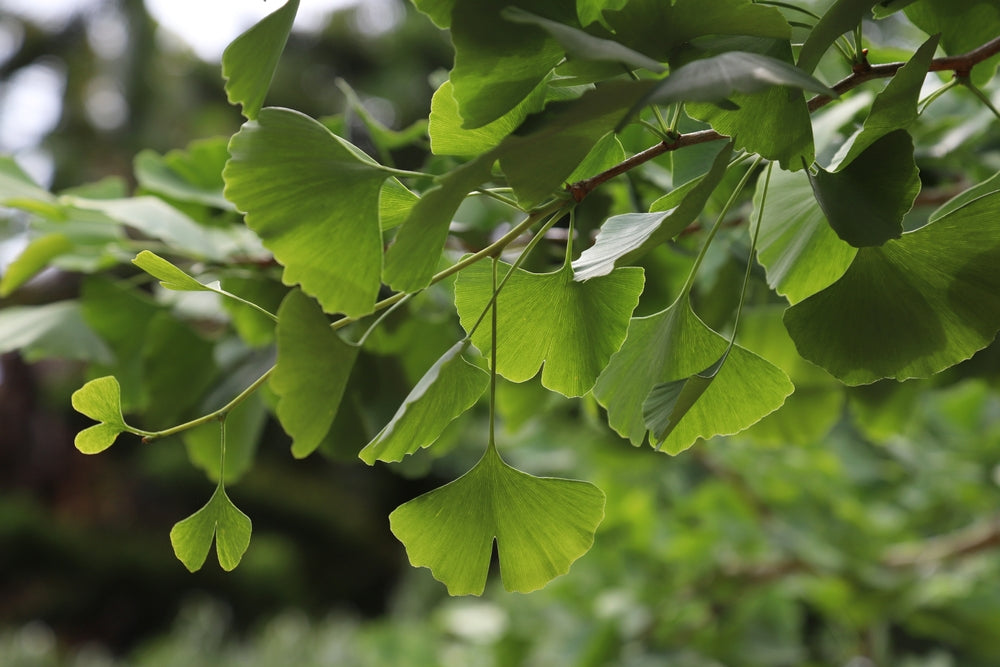
The ginkgo's distinctive fan-shaped leaves feature radiating veins and in autumn, they turn a striking saffron yellow, making ginkgo a prized ornamental tree. So beautiful are the fallen leaves that they can be left as a golden halo around its base rather than swept up and taken to the leaf bins.
Ginkgos are renowned for their longevity and hardiness. They can grow to impressive heights of 20-35 meters, with some specimens in China exceeding 50 meters. Their resilience is attributed to disease resistance, insect-resistant wood, and the ability to form aerial roots. Some specimens are believed to be over 2,500 years old.
Ginkgos are dioecious, with separate male and female trees. Uniquely among seed plants, ginkgo uses motile sperm for fertilization, a characteristic shared with more primitive plants like ferns and mosses.
Widely cultivated as an urban tree due to its tolerance for pollution and confined soil spaces, the tree makes an attractive addition to any street. One slight caution - the fruit of the female plant has a particularly unpleasant smell. Extract from the leaves of the tree are used as a popular dietary supplement, although scientific evidence for its health benefits remains inconclusive. It’s often said that if you catch a falling ginkgo leaf you’ll have good luck, and a ginkgo leaf in your wallet means you’ll always have money.
Although there is only one species of ginkgo, there are several cultivars available to gardeners each with its distinct and unique attributes. ‘Princeton Sentry’ is a tall columnar or fastigiate variety. ‘Autumn Gold’ is a spreader, great if you need to add shade to your garden. A variegated form known as ‘Majestic Butterfly’ is a small tree growing to just 3 metres, and ‘Saratoga’ has unusual, long, elongated leaves.


