





Technology in the garden - self-watering pots
Containers need a lot more watering than planted borders and can be a problem if you go away a lot or are busy. Self-watering planters can be an excellent solution - they’re also useful in areas without easy access to water.
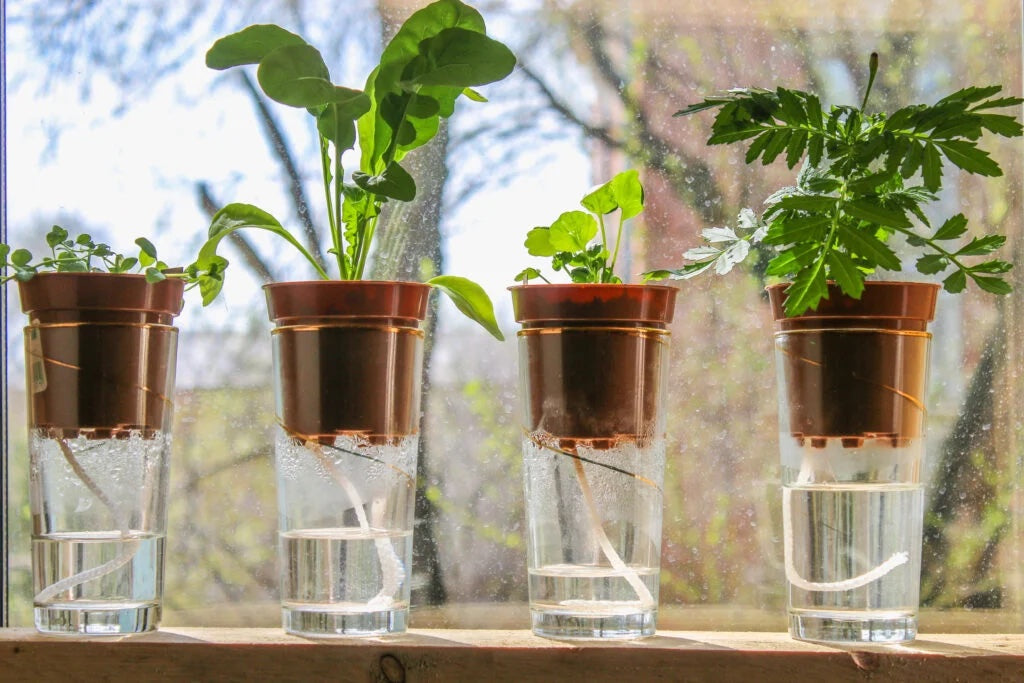
These innovative systems vary in terms of style, sophistication and features on offer, but generally work by allowing plants to draw up water from a reservoir at the base rather than the traditional watering from the top.
Although designs differ in terms of style, sophistication and features, they generally consist of two main compartments, a top one to hold the root and soil and the bottom one with the water reservoir from which plants can absorb water.
The compartments are connected by a wicking mechanism, such as capillary matting, which absorbs water from the reservoir into the soil. This means the moisture levels in the soil tend to stay at a consistent level because, as water is absorbed through the plant’s roots, it is released from the leaves through transpiration and more water is drawn up by the roots to replace it. This also helps the plants develop a good root system as the plant roots spread out in search of moisture in the soil.
The reservoir holds enough water to keep the plant watered for extended periods without the roots sitting in water, although if it hasn’t rained, this will need to be topped up with watering – contrary to their name, they don’t actually water themselves! Look for a planter with a water reservoir that’ll provide enough water so that you won’t have to fill it every day.
As well as there being a huge range of different styles to choose from, self-watering pots also vary in terms of functionality. The method of filling the reservoir ranges from a very obvious tube, to an opening in the container rim. Some tubes have caps to keep pests and debris out of the reservoir while others have features such as a water level gauge, so that you have a better idea of when to refill the reservoir. All planters should also have an overflow mechanism and way of draining the reservoir at the end of the season to avoid plants sitting in freezing water.


