





Technology in the garden - smart rain gauge
It’s easy to overestimate how much water a garden has really had after it’s rained. The soil might look wet, but it could be surface moisture. A rain gauge can help you be more precise when watering and prevent overwatering.
Rain gauges come in many different designs but are divided into analogue and digital. Analogue gauges hold water in a cylinder that you read directly from the gauge itself. In heavy rain, depending on the size, you may need to take several measurements in a day - so ideally go for a larger (around four-inch) capacity. A professional analogue gauge like the Stratus Precision has an 11-inch capacity.
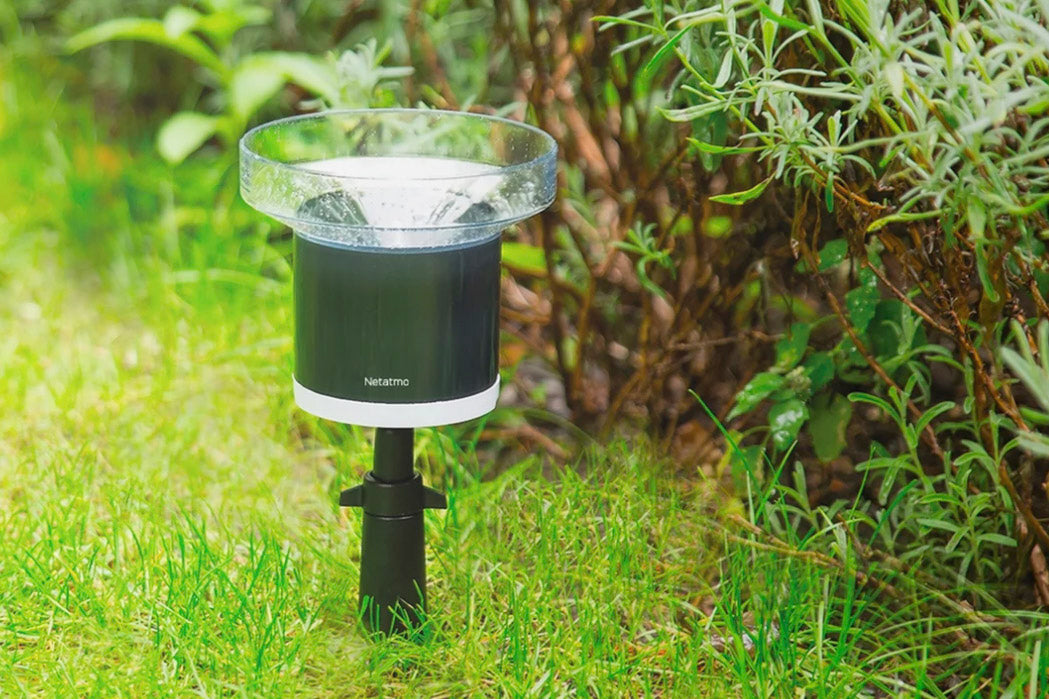
The advantage of digital rain gauges is that they work remotely so you won’t have to go outside to read it. Most work with a ‘tipping bucket’ design, where the rain is directed into small containers that tip backwards and forwards in relation to the amount of water collected, so there’s an unlimited measuring capacity. An example of this includes the Netatmo Rain Gauge which is an add-on to the Netatmo Weather Station with rainfall data sent to your smartphone.
As a very general rule, plants need around one inch of water a week. A rain gauge will tell you if you’ve really had a proper downpour and can forget watering that week or just a little shower and need to top up. Some digital models provide data that can be used to optimise your smart sprinkler system or notify you when it starts and stops raining.
To ensure your rain gauge is effective you’ll need to put it in an open area not under a tree or near a wall or tall building. And ideally attach it with a mounting bracket, to a fence or post, so that it’s off the ground. The size of the opening should ideally be around four inches in diameter for accuracy.


