








The plants around us - cotton
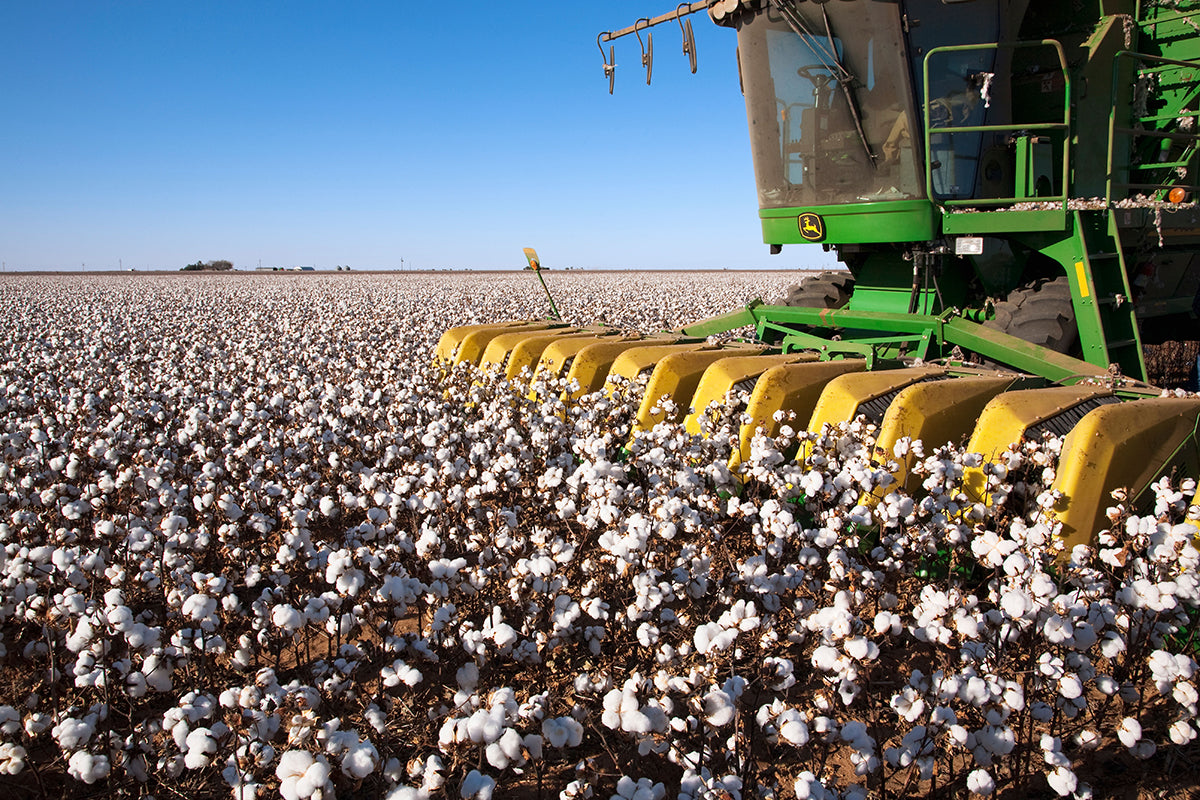
Cotton has been shaping human civilization for millennia, with evidence of its use dating back to prehistoric times. The soft, fluffy fibre that grows protectively around cotton seeds was domesticated in both the Old and New Worlds.
The earliest traces of cotton use come from ancient India around 5500 BC, where fragments were preserved in copper beads at Mehrgarh. In Mexico, indigenous peoples were developing their own cotton cultivation, with the domestication of Gossypium hirsutum - the most widely planted species - between 3400 and 2300 BC. In Peru, coastal cultures like the Norte Chico were working with cotton by 4200 BC, using it to craft fishing nets that became of huge importance to their maritime economy.
Medieval Europeans, unfamiliar with cotton's true nature, believed it grew on trees as wool. This misconception stems from Herodotus's writings about India's wool-bearing trees and persists in words like German ‘Baumwolle’ for tree wool. Some, like 14th century traveller and writer John Mandeville, even imagined trees bearing tiny lambs. By 1350, the spinning wheel revolutionized production, and major ports like Venice grew wealthy from the cotton trade.
Today, four main species of cotton dominate global production. Gossypium hirsutum, known as upland cotton is native to Central America and accounts for 90% of world production. Gossypium barbadense contributes over 5%. The remaining production comes from two Old World species - the tree cotton Gossypium arboreum and Levant cotton Gossypium herbaceum.
The production of cotton took a dramatic turn in the 1400’s with the invention of the cotton gin, a machine that removed the seeds from the cotton fibres. This revolutionary device transformed cotton processing from a labour-intensive task requiring 600 hours per bale to one requiring just a dozen hours. So great was the impact, particularly in the American South, it earned the nickname ‘King Cotton.’
Today, cotton remains a global commodity, with current world production reaching approximately 25 million tonnes annually, while using 2.5% of the world's arable land. India leads global production, while the United States maintains its position as the largest exporter. The fibre's influence extend beyond the Earth. In 2019, cotton made history as the first plant to sprout on the Moon's far side, germinating aboard China's Chang'e 4 spacecraft.


