







The plants around us - saffron
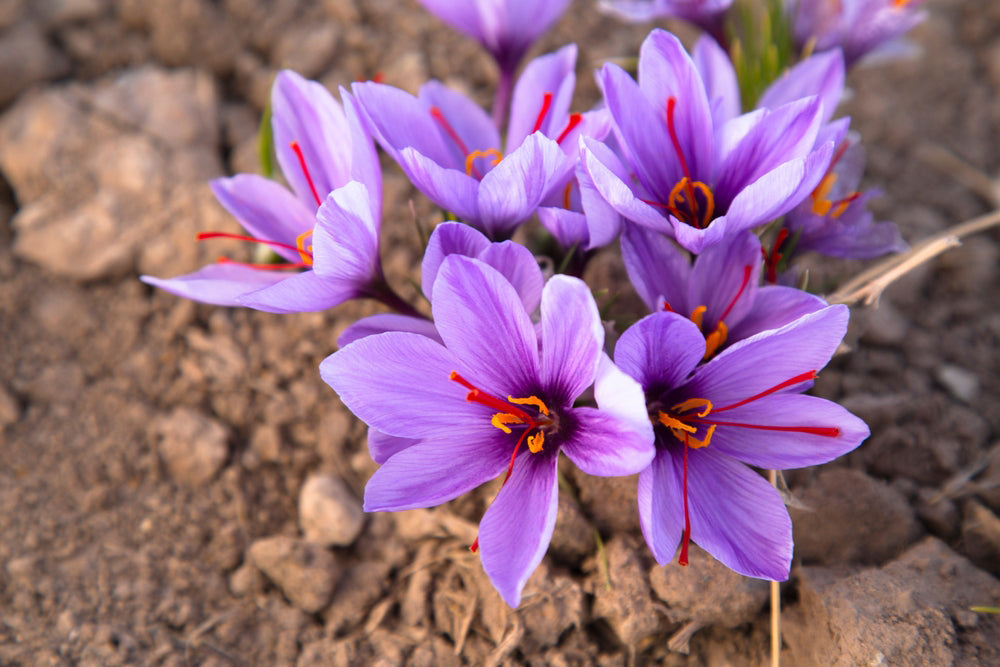
Saffron is a popular spice in Britain where it’s enjoyed in buns, cakes, and rice dishes. The source of the spice, famously more expensive than gold, is the saffron crocus (Crocus sativus), an autumn-flowering perennial, that’s unknown in the wild. It’s thought to be descended from Crocus cartwrightianus the ‘wild saffron,’ which is native to the eastern Mediterranean regions including mainland Greece, and its islands.
Surprisingly, reproduction depends entirely on human intervention as its purple flower is sterile and doesn't produce any viable seeds. To overcome this, the plant reproduces itself through corms - underground, bulb-like organs that store starch. Each corm survives a single season and can produce up to ten ‘cormlets’ that are collected, planted out, and develop into new plants. These brown corms, measuring up to 5 centimetres in diameter, feature a distinctive fibrous coating with the lovely name of the ‘corm tunic.’ This protective layer develops from dead leaf stems and sheaths - remnants of the previous years' growth. The covering acts as a natural shield, protecting the corm from various threats such as insect damage, burrowing animals, flood damage, and dehydration.
Flowering occurs in October, with the flowers ranging from light lilac to a striated mauve. They emit a sweet, honey-like fragrance and grow to nearly 30 centimetres. Each flower produces just three of the sought after and valuable crimson saffron stigmas.
Saffron is still considered to be the world's most expensive spice, with the prices fluctuating widely but often reaching nearly £5,000 a kilogram. This reflects the labour-intensive harvesting process with each kilogram requiring approximately 440,000 hand-picked stigmas, equivalent to 150,000 flowers and forty hours of manual labour. To put this into context, one flower produces 30mg of fresh saffron, reducing to 7mg when dried. Iran currently dominates global production, contributing 90% of the world's supply.
The spice's heritage is well documented, dating back to the 7th-century BC while the name ‘saffron’ probably originates from the 12th-century Old French word safran, itself derived from Latin safranum and ultimately from the Persian za'faran or zarparan, which means ‘gold strung.’
The spice's taste and its golden-yellow colouring comes from crocin, a carotinoid pigment that has made saffron valuable as a culinary ingredient and a textile dye.
Saffron growing was once a thriving industry in England, particularly in Saffron Walden, Essex. The town, originally called Walden, earned its new name from the spice that brought considerable wealth to the region. Documented in Gerard's 1597 Herbal, saffron growing thrived throughout Cambridgeshire and surrounding areas. The spice served multiple purposes, from medicine to luxury dyeing until cheaper imports and changing tastes led to its decline.


