







Wildlife in the garden - the robin
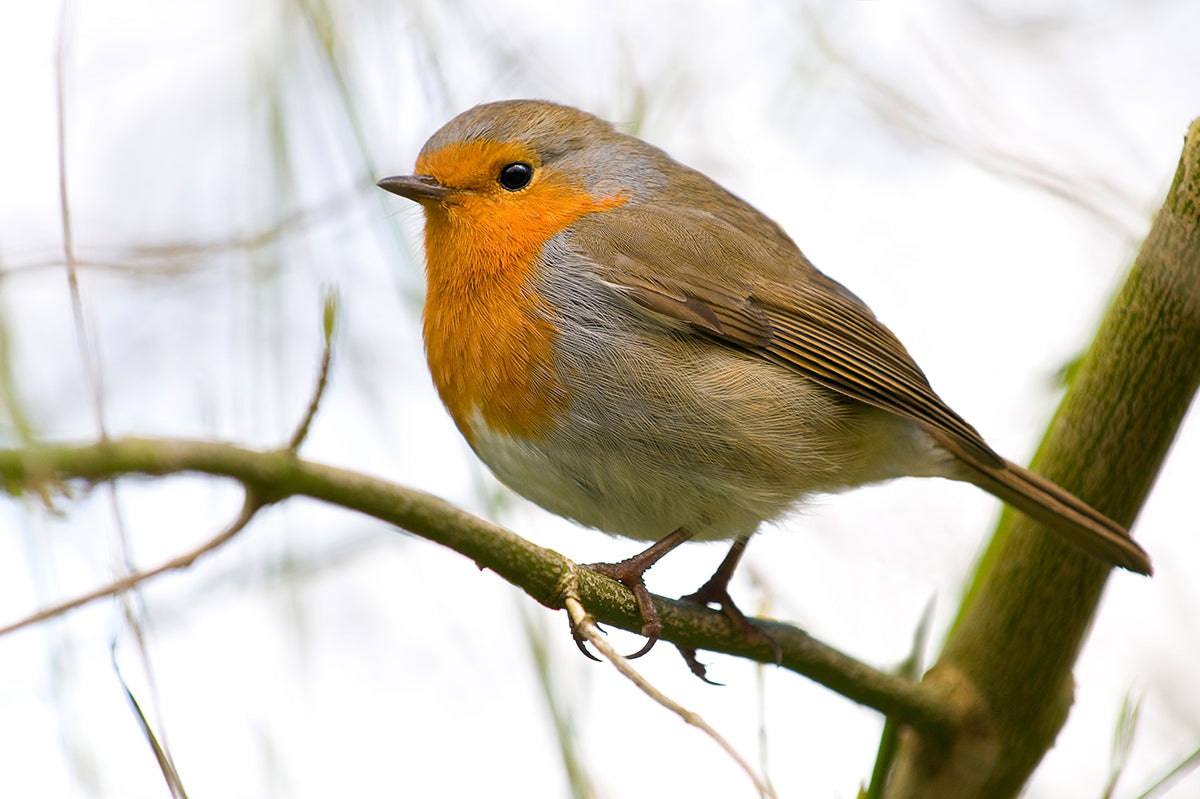
What bird could be more symbolic of winter that the red breasted Robin? A gardener’s friend, the robin will often follow keen gardeners around the garden, investigating any recently turned soil for worms and beetles. Many become very tolerant of humans often feeding from a held out hand. It’s a big contrast to robins on the continent who are shy, retiring, woodland birds that avoid humans. It’s thought this may be down to the Mediterranean tradition of trapping and shooting songbirds that has conditioned them this way.
Exceptionally territorial, robins will aggressively defend their patch against others of their species, so much so that it is thought 10% of fatalities occur due to these confrontations.
These days food designed specifically for robins is available. Consisting of sunflower hearts, chopped peanuts, rolled oats, and sultanas, they also contain dried mealworms and high energy suet pellets. (Dog owners beware - raisins can poison your pet)
The European Robin, Erithacus rubecula, gained its popularity and took its place on Christmas cards in the 1880’s. This association between robins and Christmas has a number of fascinating origins. In Victorian Britain, postmen wore bright red uniforms, earning them the nickname ‘Robins’. This connection led to robins appearing on Christmas cards as a symbol of the postmen who delivered them.
The robin's Christmas connection however predates the postal service through Christian folklore. One legend tells of a robin pulling a thorn from Christ's crown during the crucifixion and singing to ease his suffering. The bird's red breast allegedly came from being stained by Christ's blood. Another tale places the robin in Jesus's nativity story, where it sacrificially placed itself between a blazing fire and the infant Christ, resulting in its breast being scorched. This act of protection supposedly left all future generations of robins with red breasts.
Interestingly, what we call a robin's ‘red’ breast is actually orange. This misnaming occurred because the English language lacked a word for the colour orange until the 16th century, despite having the word ‘orange’ for the fruit. Many orange-coloured things were simply described as red during this period. The colour orange eventually derived its name from the fruit, but the robin's traditional name remained unchanged.


