








Chinese lanterns
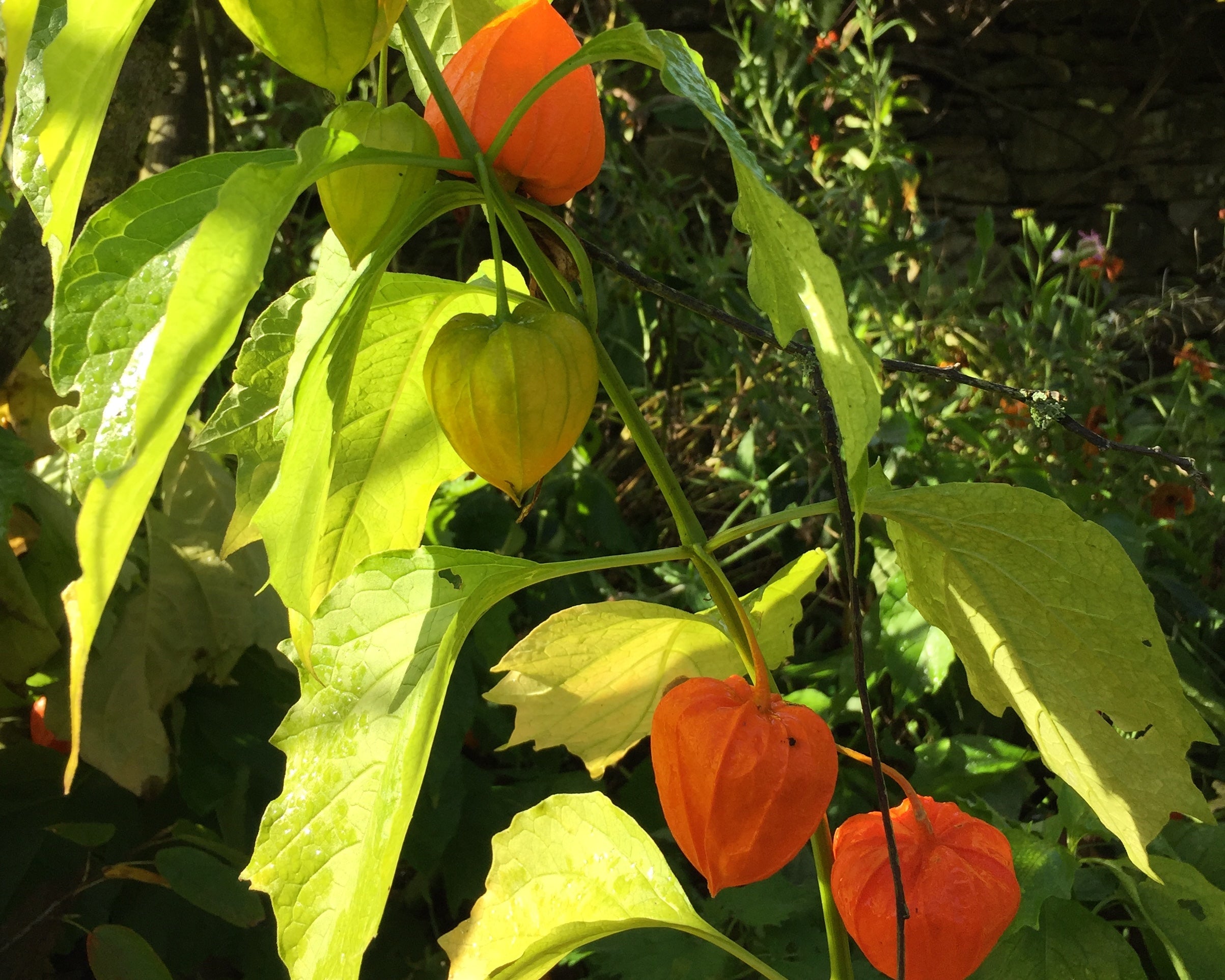
Every autumn our Cape Gooseberries announce themselves with bright orange lanterns that go hand in hand with falling leaves, the smell of wood smoke, and the gradual decline of the summer-gardens leading performers.
Skulking away under our Amelanchier they go unnoticed all summer, hidden by the growth of a nearby Helenium and Euphorbia. When we cut these down we’re always welcomed by the injection of late colour that the lanterns of Physalis alkekengi give us. We’re quite happy for it to be hidden most of the year; it’s an unruly scrambler, never standing upright as the glossy magazines would have us believe.
In history Greek botanist Dioscorides (40-90 AD) recommended the berries as a cure for epilepsy and country people would take it themselves for the after effects of scarlet fever. Suffering from none of these afflictions we prefer to simply use the cut stems in autumnal vases or a welcoming wreath on the front door.


