








Cockchafers
We were having a bit of a move-around this week. Digging up perennials, splitting them, replanting, and potting up any excess. Recent downpours will instantly date this blog but we were surprised at just how dry the soil was at root level.
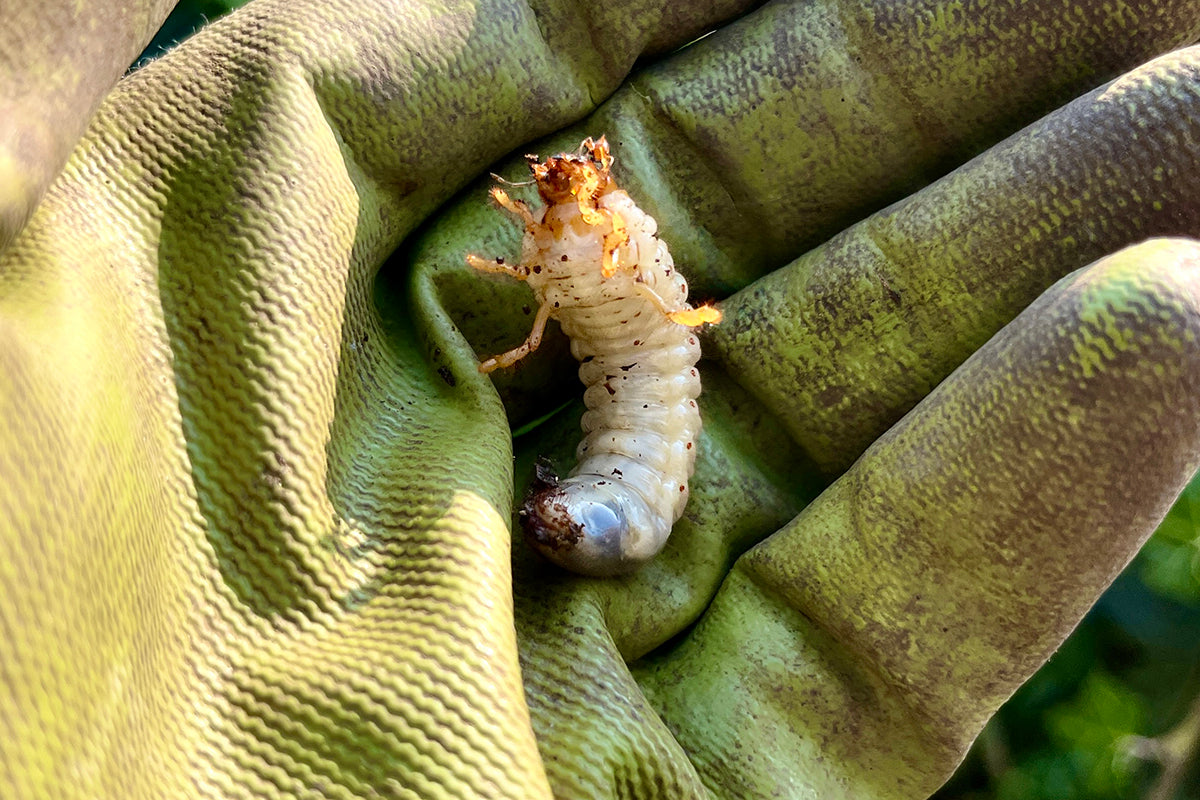
Discoveries, apart from old plant labels, and some broken pieces of pot, were several large C-shaped larvae of the cockchafer beetle. The adults are large light brown beetles measuring 20-30mm and are known for their distinctive black and white abdominal bands and fan-like antennae. They’re powerful but clumsy fliers, producing a characteristic humming sound. We often encounter them on warm summer evenings in our meadow when they blunder into our hair with a loud buzz before dropping to the ground. Often called Maybugs, they appear in May and feed on deciduous plants, especially oak. As can be seen from our picture their larvae are white, curved grubs that feed on plant roots. Their life cycle lasts 36 months over a 4 calendar-year span. They tend to have major hatches every 3 years.
Historically, Cockchafers caused significant damage. A plague in western Ireland in 1688 left the countryside bare ‘as in the depth of winter.’ Today, Cockchafers cause minimal damage, likely due to mechanical cultivation killing fragile larvae and changes in production systems.


