








Goddess of the rainbow
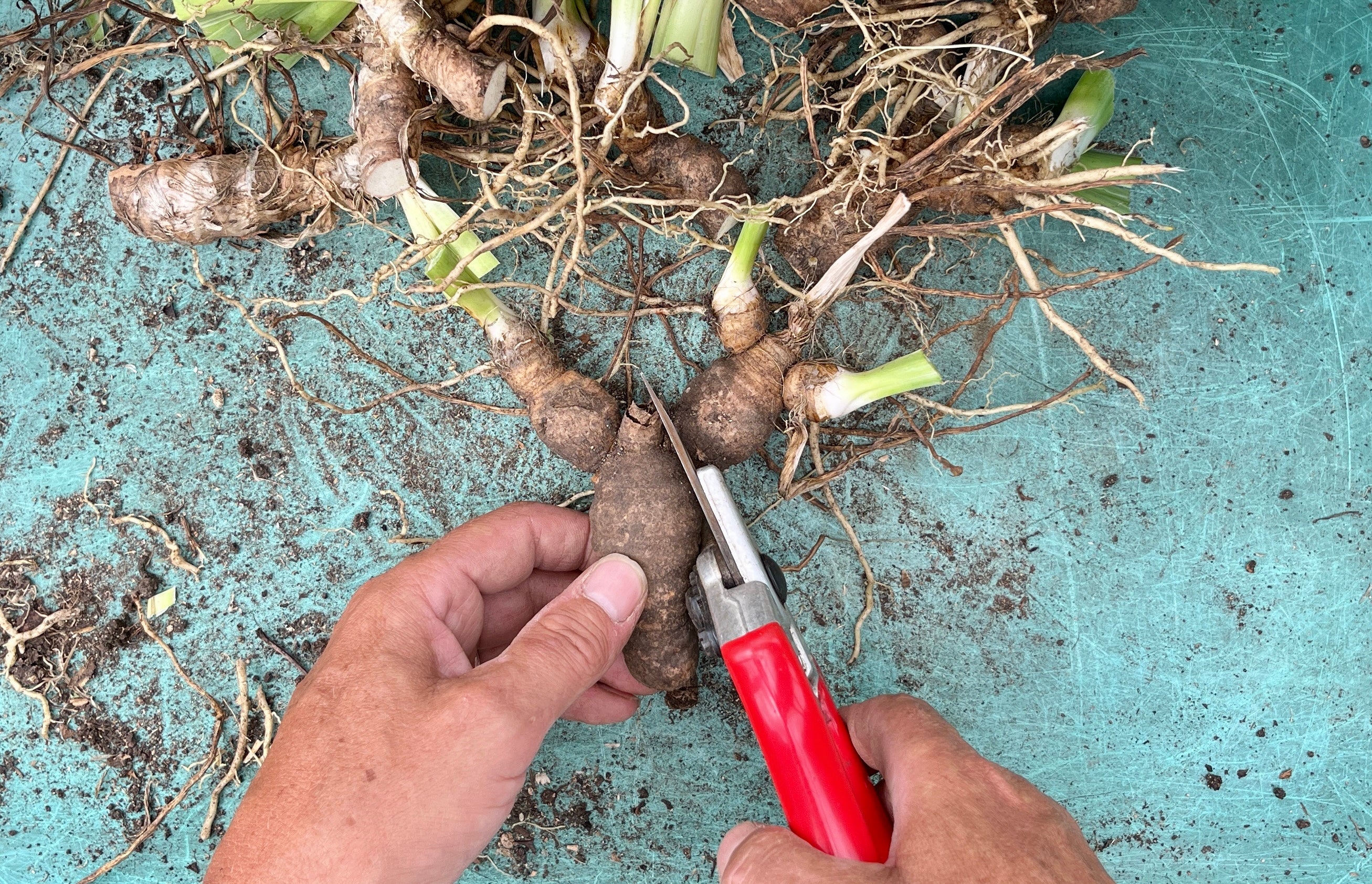
If you’ve been reading this blog for some time you will know that every few years we have to split our clumps of Iris when they become congested. Flowering starts to drop off as the horizontal rhizomes expand creating a clump that is overcrowded and struggling for space.
We dig up rhizomes with a border fork gently teasing out the roots and take them to the greenhouse to be tidied up (pictured). Dead sections are cut out, leaves and roots reduced and the general health of each plant assessed before being retained or consigned to the compost heap. Any particularly small but healthy specimens are bedded out in a spare section of the vegetable garden where they are bulked up and given to friends or transplanted to other areas of the garden.
In ancient times Iris was known as the goddess of the rainbow due to the myriad colours in which she could be found. The modern gardener can not only enjoy the huge variety of colours but a quick glance at The Plant Finder - the bible for plantaholics - shows over 24 pages worth of listed varieties. Now that would be a national collection to see!!


