




Hedge laying - the propensity to survive
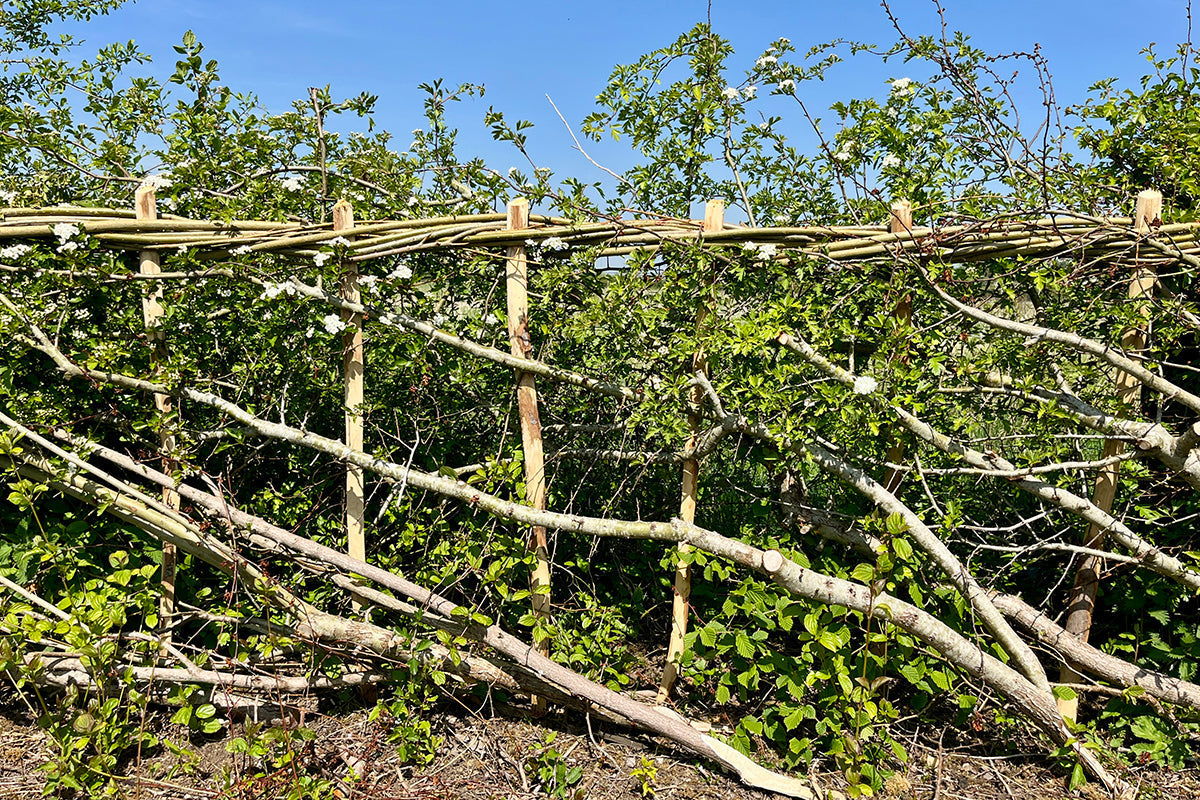
Back in the spring a hedgerow just up the road from Genus HQ was attended to by a hedge-layer. Stems of blackthorn and hawthorn were partially severed allowing them to be laid down at angle of approximately 45 degrees. It’s an ancient technique that makes for a stock-proof boundary and a dense habitat for bats, birds, and invertebrates.
The propensity for the trees or shrubs to survive is quite astounding - cut almost entirely through, the thin layers of bark, cambium, and sapwood remain barely connected allowing the plant to continue taking up moisture and nutrients. At this stage the craftsman calls the stems ‘pleaches’, or a ‘three quarters cut’. Upright chestnut stakes are driven in every few metres and then a twisted top of hazel binders is woven through making the whole construction rigid and stable.
Our local example was probably 200 metres long and within that length we couldn’t see one tree that had suffered or died from the seemingly brutal treatment. There are numerous regional styles all employing a slightly different approach. Ours is in the Midland style and designed to take the pressure from cattle pushing against it. The National Hedge Laying Society website is a great resource for information on the subject and they have a ‘Find a Hedge Layer’ search function if you have a neglected hedge that needs rejuvenating.


