





Move, lose or Chelsea chop?
We spent some time in the vegetable garden this week. Comprising more than twenty small raised beds, it’s taken a bit of a back seat in recent weeks and needed some serious attention. We hand weeded the wood chip paths and were very happy to see that the cinnabar moth caterpillars mentioned last week had left the groundsel plants and crawled off to pupate in their subterranean crevices.
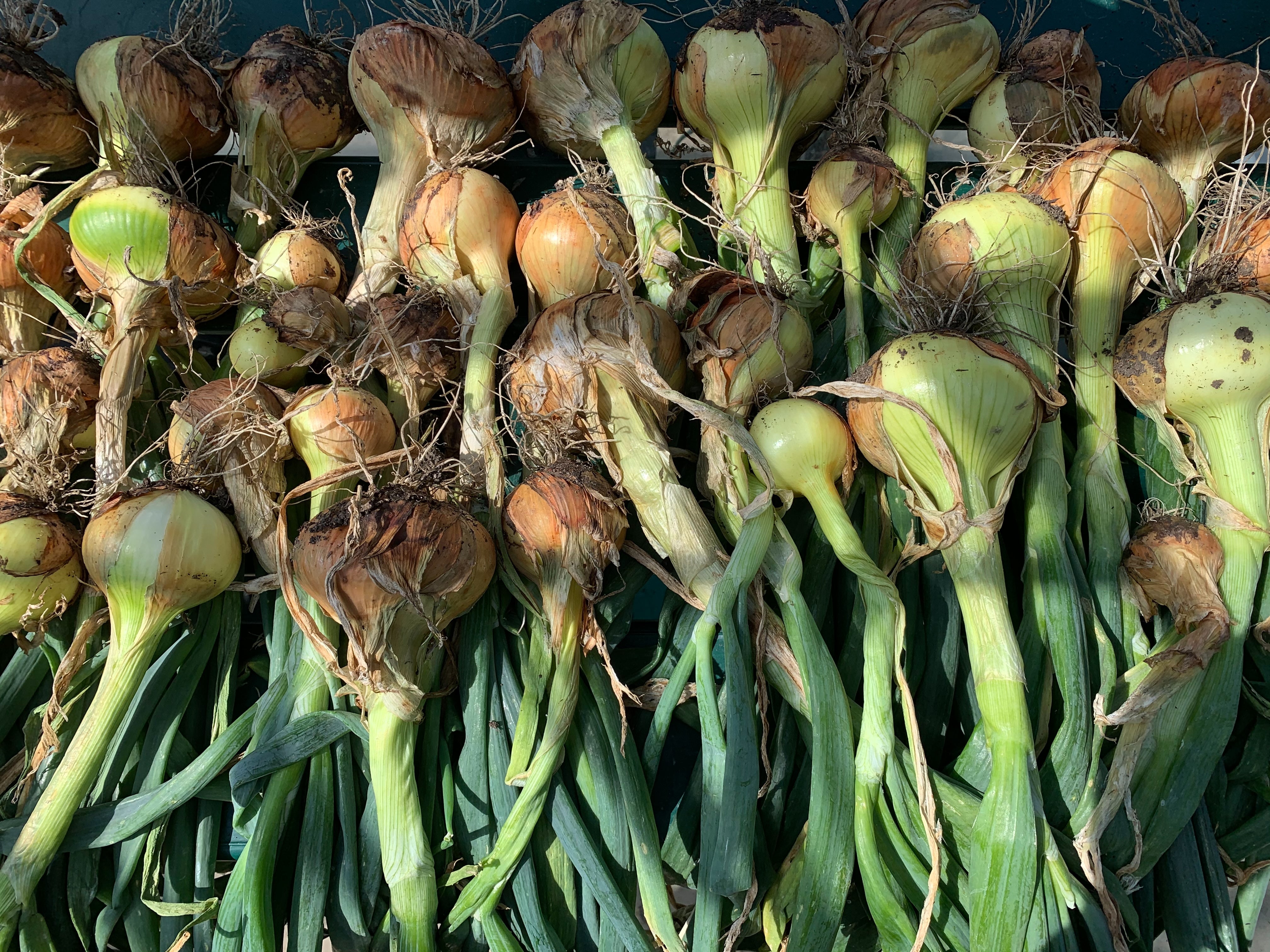
A number of our uncropped lettuces were heading skywards and were removed to make space in the beds. All our onions were lifted, the white ‘Sturon’ and red ‘Retano’ having done very well and should keep us going in the kitchen until after Christmas. Our ‘Picardy White’ garlic that was planted incredibly late (24th February) has performed surprisingly well, producing good sized bulbs with excellent segmentation- late planted garlic often only produces a single white ‘marble’ with no individual cloves.
Making the most of the available space we sowed some spinach in a number of the empty beds. With the vegetable garden now bright and shiny we spent some more time in the flower garden deadheading, cutting back, and trying to decide what to do with the huge clumps of helenium that are now over six feet tall and dominating the garden; do we move, lose, or employ a particularly aggressive Chelsea chop? At least we’ve got six months to decide.
Clothes in action: Women's 3-Season Gardening Trousers


