




Obblyonkers
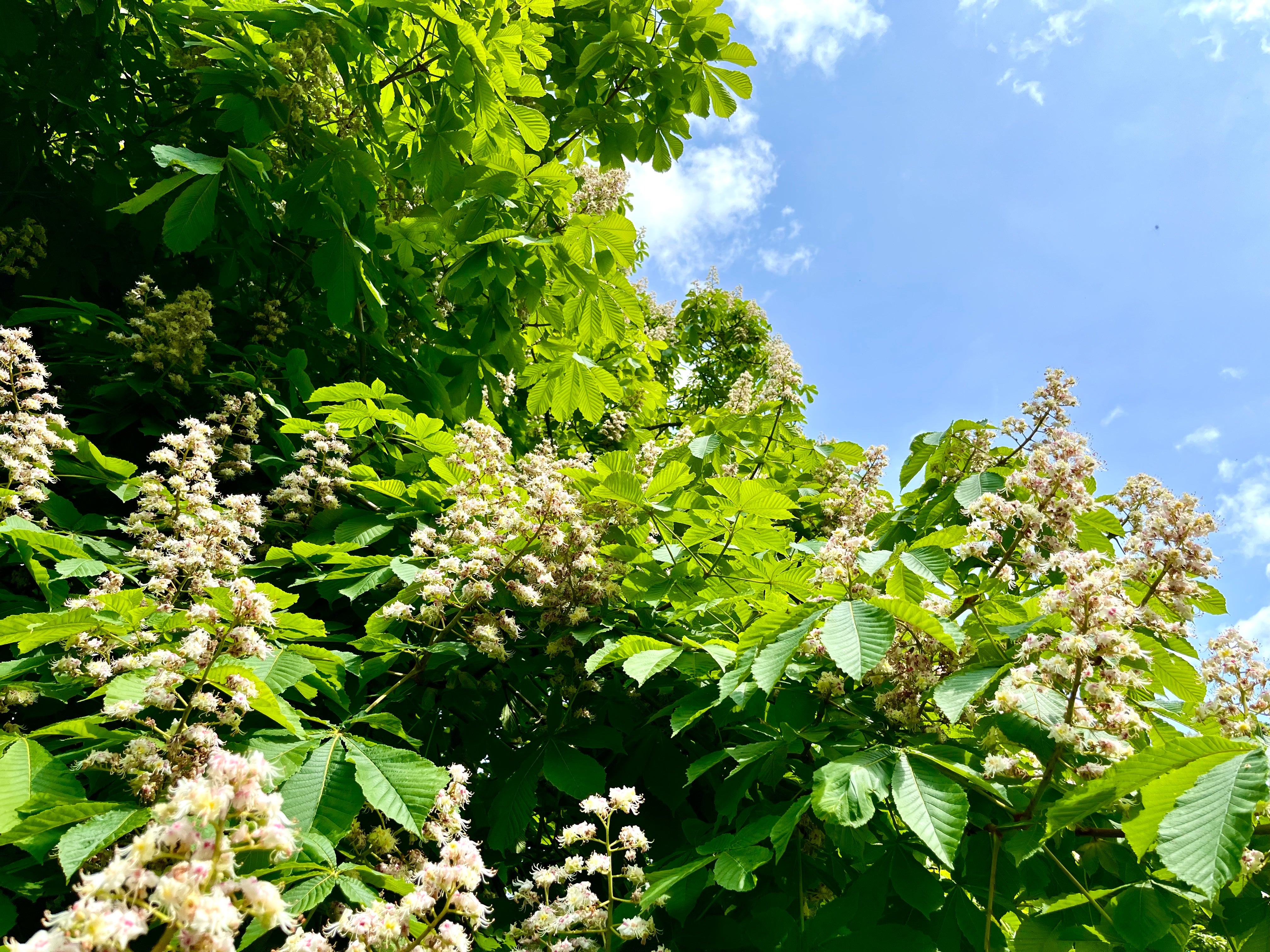
We’re very lucky to have three Aesculus trees in the Genus garden. One, Ausculus x carnea the red horse-chestnut is a hybrid between Aesculus hippocastanum and A. pavia and is thought to have originated in Europe in the early 19th century. It’s located to the far end of our shrub border and requires no intervention or pruning apart from the raking up of its conker husks in late summer when we want to mow the orchard lawn.
The other two trees are the classic conker. - Aesculus hippocastanum. Tall and wide we have them reduced in size from time to time. In May they sport their stunning ‘candles’ (pictured) - upright panicles of intricately arranged white flowers with pink and yellow blotches. The well known conkers that are produced in late summer have been enjoyed by children for decades, though health and safety as well as the mess they make have seen them banned from many school playgrounds. Granny used to call them obblyonkers and the sticky buds that appear before the leaves emerge were often known as ‘cacky monkeys’.
It’s a classic parkland tree that was introduced in the late 16th century but is being planted less and less these days. A number of diseases and the leaf mining moth, whose caterpillar causes browning of the leaves from midsummer onwards, are causing it to fall out of favour. Budding Capability Browns are having to look for alternative options to use in parkland settings.
Our local estate having removed a large avenue of 300 year old diseased, and dangerous trees has replaced them with Tilia x europea the common lime. Let's hope that they remain problem free for the next 300 years but it’s sad to think that 21st century children will be missing out on the excitement and simple joys of playing with a tree seed and a bootlace.


