




Saving seed - saving future generations
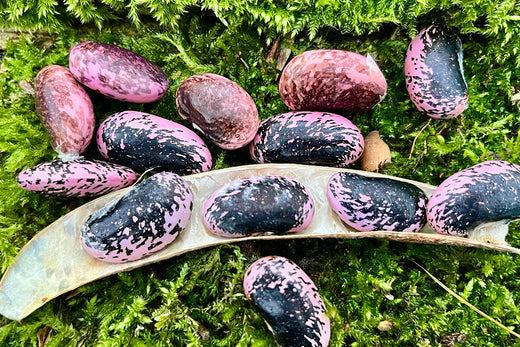
The remains of the runner bean wigwam were looking rather forlorn this week with the skeleton of hazel sticks and string wrapped in its coat of desiccated bean stems. Several bean pods remained, those near the ground open and shredded by passing rodents, those up high remained hanging like long forgotten Christmas decorations.
Splitting open the pods revealed a surprising blaze of pink. I decided to relieve a few pods of their treasure and save a dozen seeds for next year’s sowing. Saving seeds isn’t a new idea of course. Our grandparents and great grandparents were experts at it and collecting seed isn’t just a means of saving a few shillings. Certain species or strains of plant can be maintained and preserved in this way for decades.
Taking the idea somewhat further The Svalbard Global Seed Vault beats our old 'Rover biscuit tin under the stairs' and is the ultimate backup plan for agricultural biodiversity. Located within Norway's remote Arctic archipelago on the island of Spitsbergen, this secure underground facility serves as a safety deposit box for the world's crop diversity, storing duplicate seeds from gene banks across the globe.
Constructed with Norwegian government funding at a cost of 45 million kr (£7million), the vault protects the seed collections against various threats such as natural disasters, war, disease, and technical failures.
Opened officially on February 26, 2008, the vault rapidly expanded its collection. By its first anniversary, it housed over 400,000 seed samples including varieties from Ireland, the United States, Canada, Switzerland, Colombia, Mexico, and Syria. This collection represented approximately one-third of the world's most important food crop varieties, and should safeguard global food security for future generations.


