





Social climbers
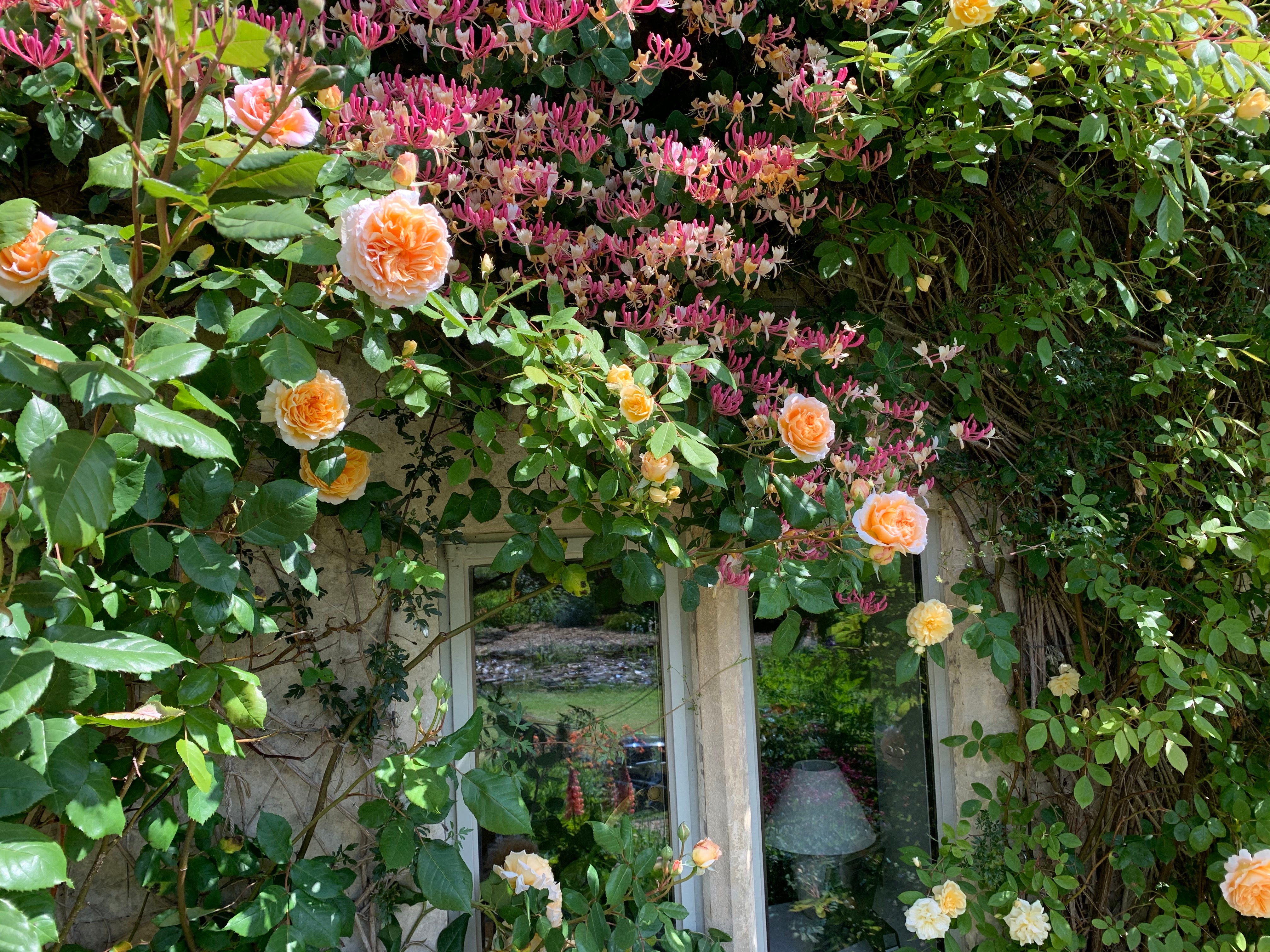
Genus HQ is looking fabulous at the moment with the cottage swathed in climbers at their absolute prime. Blending the house into the garden, their enthusiasm for life requires a firm hand but they repay us so generously with their colour and scented display.
On the south wall the rose Crown Princess Margareta is joined by a honeysuckle, next to which is a pale yellow double flowered rose, name long forgotten, all backed by a Clematis cirrhosa that is constantly making a dash for the gutters and roof tiles.
Another honeysuckle ‘Dropmore Scarlet’ rubs shoulders with a grape vine that we have trained to eaves level over the last three years and now just have to rein in its enthusiastic growth from time to time.
On the north side of the house the queen of climbers, a Clematis tangutica, was cut completely to the ground last autumn and despite slight worries several shoots have reappeared guaranteeing us a late summer display of its thick petalled golden blooms.
We’ve written about our wall trained Philadelphus before; plenty of new growth is appearing and signs of flower buds promise visitors an olfactory treat when they arrive at the front door. A very well behaved and slow growing Schizophragma hydrangeoides scrambles nearby rewarding us with it’s filigree lacecap flowers in July, while ivy planted at the base of the tool store is doing well having covered the wall and now promising to repeat its performance over the roof.


