





Thinking of summer
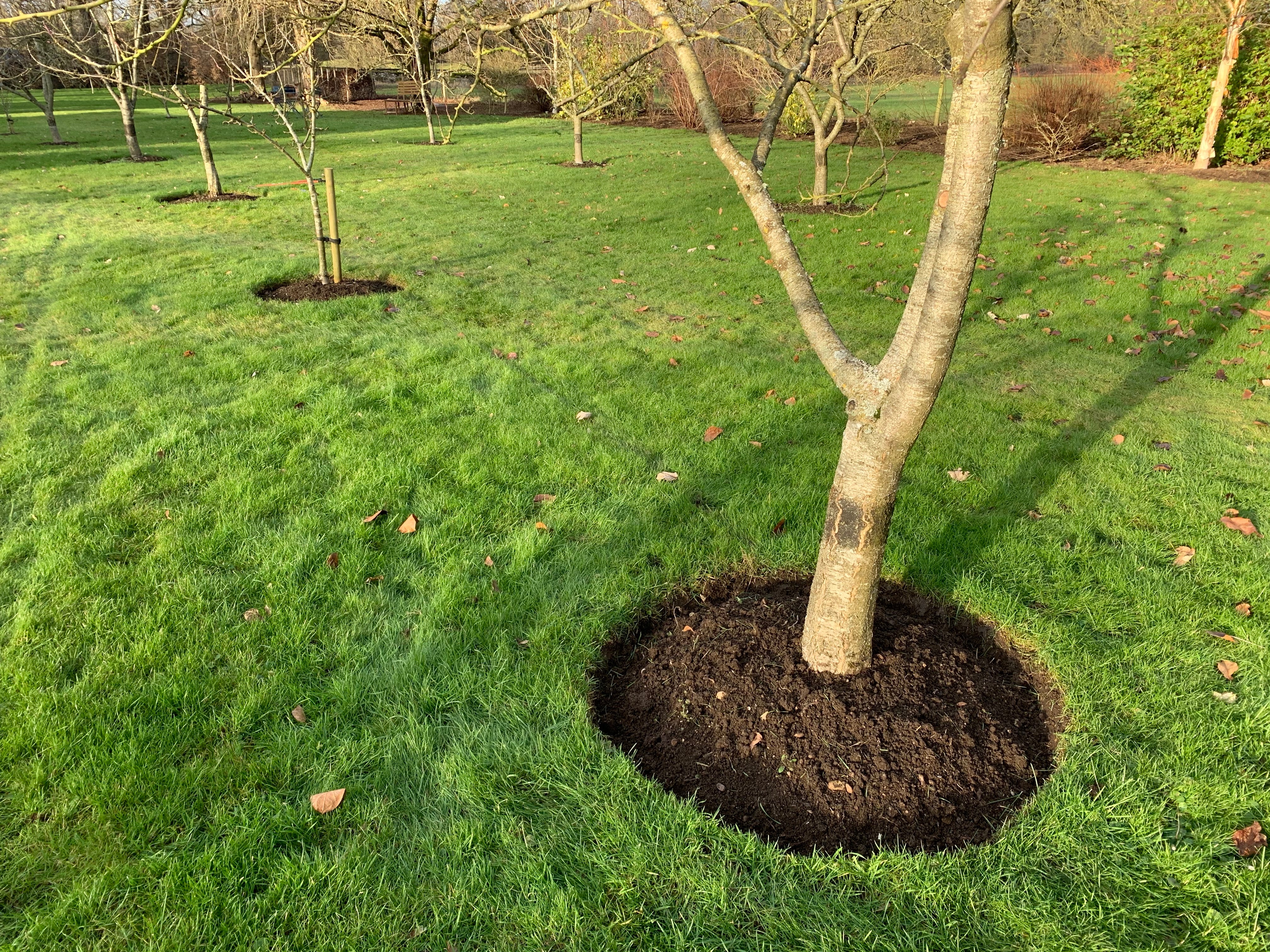
Every six months we renovate our mulched tree circles in the orchard at Genus HQ. Weeds are removed, the edges clipped with our trusty French Bahco shears, and a top dressing of our homemade compost is applied as a weed suppressant and feed.
There are a number of reasons we do this. Namely, it looks great when we’ve finished and really visually lifts that area of the garden; it’s a big return for a relatively small amount of work. Secondly, the trees give back a lot in return each year; we had a bumper crop in the orchard last year, so to maintain the tree's health is as important to us as it is to them. Thirdly, and possibly most importantly it creates a ‘safe zone’ around the tree; an area where the mower doesn't need to go. How familiar are we with damaged trees when visiting friends gardens; the trunks bashed, damaged, and weeping sticking syrup from their wounded trunks where enthusiastic gardeners have tried to get right up close with the mower or worse still a strimmer, ringing the bark completely and leading to a sometimes lingering, sometimes quick death of the cherished tree.
Back in the Genus garden and with the mulching finished we can at least reward ourselves with a glass of our own apple juice and perhaps some delicious plum crumble on Sunday, a well deserved and much needed reminder that spring and summer are not really that far away.


