







Plant folklore - house leeks
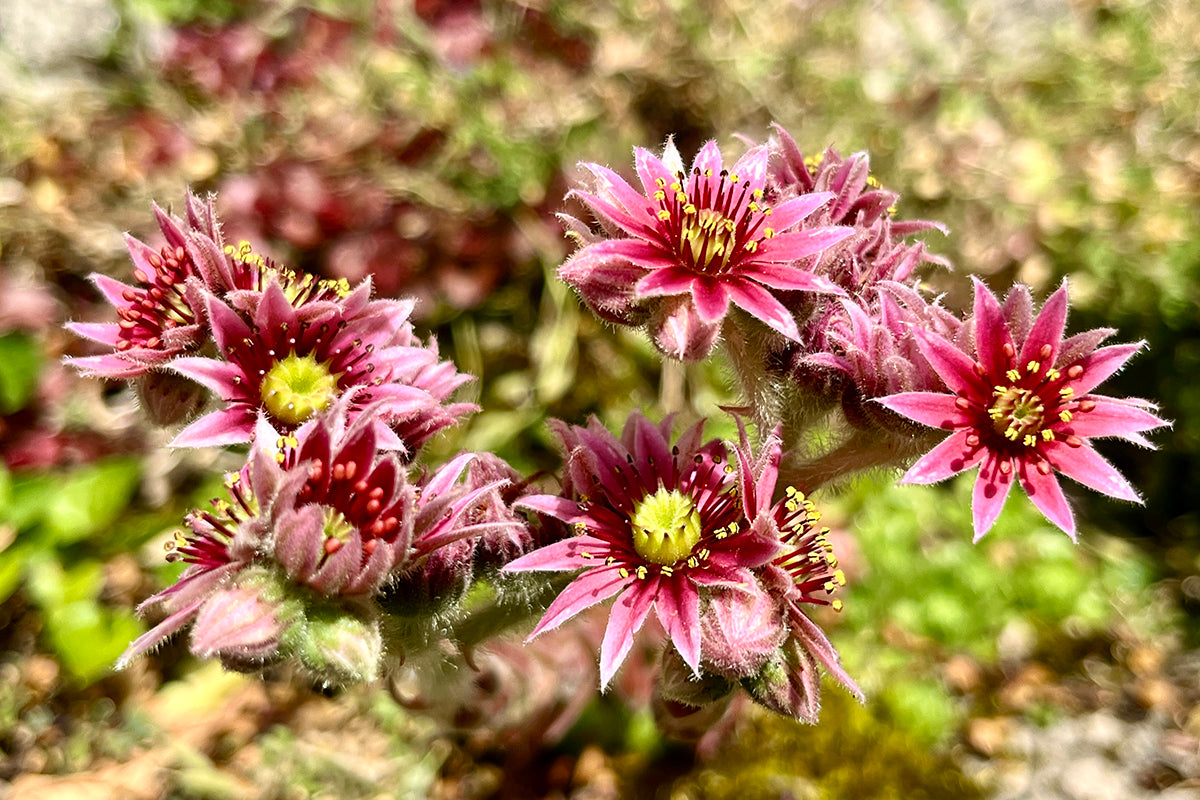
Sempervivum, commonly known as houseleeks, have been a subject of fascination and superstition in English folklore for centuries. These hardy succulents, with their rosette-shaped clusters of fleshy leaves, have been cultivated on rooftops and gardens across England since medieval times, not just for their ornamental value but for their perceived protective powers. Every summer in the Genus garden we’re reminded of this plant when it sends out beautifully intricate star shaped flowers highlighted by jewelled anthers of gold.
In English folklore, Sempervivum was believed to ward off lightning strikes and prevent fires. This superstition led to the widespread practice of planting houseleeks on thatched roofs, a tradition that persisted well into the 19th century. The belief was so entrenched, that some property insurance companies would offer lower premiums to homeowners who grew these plants on their roofs.
The plant's Latin name, Sempervivum, means ‘always living’, which contributed to its mystical reputation. Its ability to thrive in harsh conditions and propagate easily led to associations with resilience and immortality. In some rural areas, it was believed that as long as houseleeks flourished on a dwelling, its inhabitants would enjoy good health and prosperity.
For decades we have been passing a clump of house leeks slowly expanding on a window ledge in our local town. Nestled on a shallow blemish in the stone we’ve watched its progress for the last 30 years clinging on and battling through snow, frost, drought and torrential downpours. Located on the second floor we can’t imagine how it ever got there.
House leeks have played a role in folk medicine. The sap from the fleshy leaves was used to treat minor burns, cuts, and insect bites. Some believed that the plant could cure warts and corns when applied topically. In certain regions Sempervivum was linked to love and fidelity. Young women would plant two house leeks side by side, each representing a potential suitor. The plant that grew more vigorously was thought to indicate the more suitable match.
Despite the decline of many old superstitions, Sempervivum continues to be a popular garden plant in the UK. While it may no longer be relied upon for supernatural protection, its hardiness, unique appearance, and the current interest in succulents has maintained its popularity as a pot or rockery plant.


